In this article
- Why Group Homes Need a Fitness Program Partner
- What an Adaptive Fitness Partnership Covers in a Special Needs Facility
- Martial Arts Meets Neuroscience in Adaptive Group Sessions
- Vetting a Care Center Fitness Contractor: What to Verify
- Safety, Consent, and Clinical Coordination Before Day One
- Measuring Progress a Care Team Can Use
- Starting a Pilot Partnership and Next Steps
- Frequently asked questions
If you run a group home or care center, you already know the pattern. Residents want to move more, and the schedule has no room for it. Medication rounds, meals, appointments and transport use up the staff hours you have.
This article is for you as the buyer. It explains what an outsourced adaptive fitness arrangement should look like on paper, how to vet the person you hire, and how to start small before you commit to anything long.
Why Group Homes Need a Fitness Program Partner
Many special needs adults in residence have clear movement goals: steadier walking, easier transfers from a chair, better coordination, more confidence on their feet. Direct support staff care about those goals too. But a structured session needs a planned sequence, someone who can adjust it on the spot, and a protected block of time, and most staffing plans cannot spare all three.
That gap is why a fitness program partner makes sense. You would vet this person the way you vet any disability group home exercise vendor: scope, credentials, insurance, references, a review date. The partner supplies the expertise and the session design, while your team keeps its role in daily care.
I suspect few niche coaches pitch directly to administrators. Most market to individuals or families. That is a working hypothesis, not a measured fact, but it fits how little written, facility-level scoping you see in this field. The caregiver guide to adaptive fitness for special needs adults covers the same population from the family and caregiver side.
Jeff Battenberg built Neuro With Mr. B around this kind of work. He is a sixth-degree black belt and neuro-training specialist, founded Texas's first Rock Steady Boxing affiliate, and holds ongoing certification through the NeuroTraining Institute. His coaching includes special needs adults as well as clients with Parkinson's.
What an Adaptive Fitness Partnership Covers in a Special Needs Facility
Treat the partnership as a written scope of work, not a handshake. If it is not in the document, you cannot hold anyone to it.
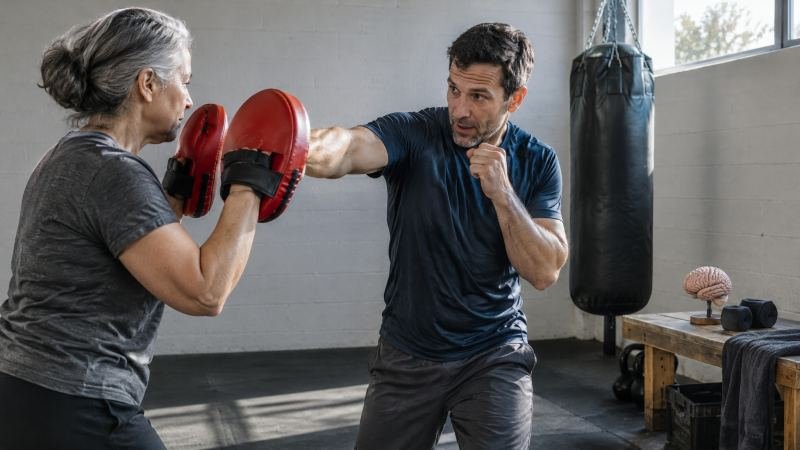
Rock Steady Boxing shows why this works. Its repeatable class format lets trained coaches run a session for a whole group, and the same logic applies to a residence: a defined structure that doesn't depend on one person's memory.
An Onsite Fitness Instructor for Group Homes: Scope and Schedule
An onsite fitness instructor for group homes should appear in your contract with specific duties. At minimum, the scope should name five things:
- Who leads each session, and who steps in if that person is unavailable
- How often sessions run, and for how long
- Which room the facility provides, and what equipment it has
- Which residents are on the roster, and how the roster changes
- How sessions fit around meals, medication times and appointments
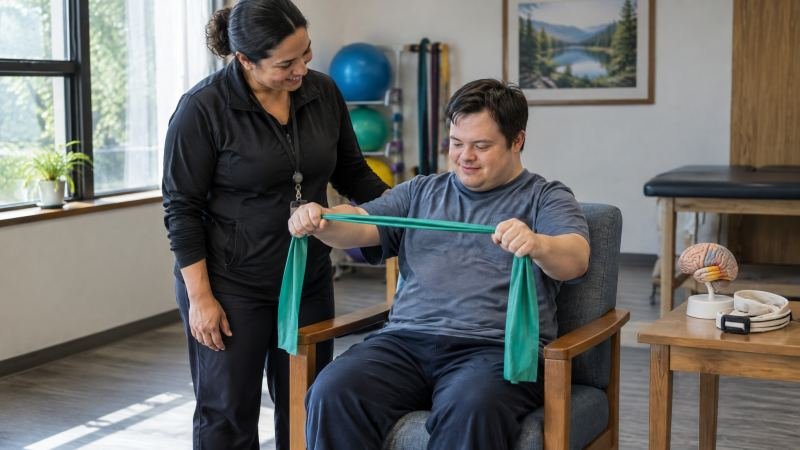
The facility keeps what only the facility can do. You supply the space, the roster and the consent paperwork. Your staff also keep responsibility for residents' daily care and for deciding whether a resident is well enough to join on a given day. The instructor leads the session, adjusts drills for each person, and reports back.
Assessment comes first. Jeff's view is that a sound program starts from what each participant can and cannot do today, so the instructor observes baseline movement and reads the support-plan goals before designing a single drill. A generic workout template cannot do that.
Training Staff to Keep Sessions Going Between Visits
An instructor who visits on set days leaves gaps on the days between. Staff training closes them, and you should treat it as a shared responsibility written into the agreement.
Ask the partner to cover three things with your team: the cues used to start and pace each drill, the safe-practice rules for the room, and the stop criteria that tell staff when to pause or end a session. With those in hand, a trained staff member can run a shortened routine when the instructor is absent.
This does not turn your staff into coaches. It gives them a short, repeatable routine and clear limits, which is enough to keep a habit alive between visits.
Martial Arts Meets Neuroscience in Adaptive Group Sessions
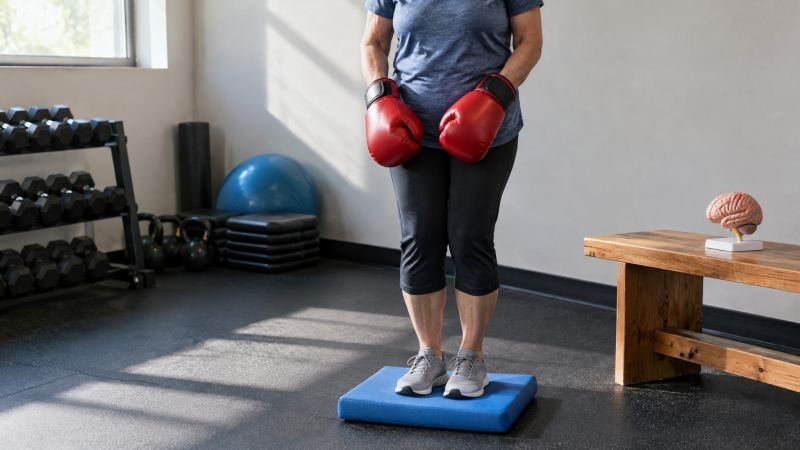
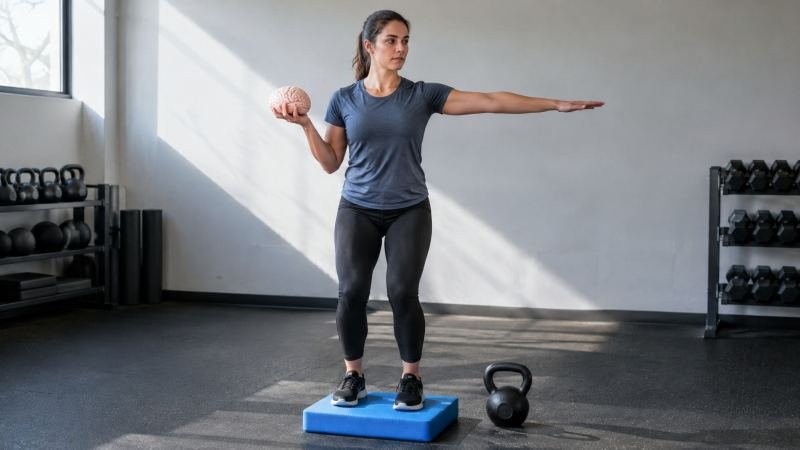
The brand's method rests on named pillars: visual, vestibular, proprioceptive, cerebellum-centric and cross-body work. Each one targets a system that supports balance and coordination, and martial arts supplies the structure that makes the drills work for a group. Stance gives a stable base, footwork gives a reason to shift weight, and boxing rhythm gives everyone a shared tempo.
These are training targets. They are not treatments, and a group fitness session will not cure or reverse a neurological condition. If you want the fuller rationale, see how martial arts training supports Parkinson's clients, since many of the same principles carry over.
Visual, Vestibular, and Proprioceptive Drills for Balance
Three systems feed balance. The eyes give a fixed reference point, the vestibular system in the inner ear senses head movement and position, and proprioception tells the brain where the limbs are without looking.
In a group session, that becomes simple, repeatable work:
- Visual: residents track a moving target or shift their gaze between two fixed points while holding a stance.
- Vestibular: residents turn the head slowly while standing or seated, with a chair or rail in reach.
- Proprioceptive: residents place their feet deliberately, press into the floor, and hold stance positions with their weight shifted.
Every drill has a seated or supported version, so one class can include residents with very different abilities. For drill-level detail, the guide to vestibular training drills for adults goes further than this page can.
Cerebellum-Centric and Cross-Body Patterns for Coordination
The cerebellum refines timing and coordination. It helps smooth a movement, so a reach or a step lands where and when it should. Drills that demand precise timing put that system to work, and boxing rhythm is a natural fit: count a combination aloud, then match the movement to the count.
Cross-body patterns pair an arm with the opposite leg, or ask a hand to cross the body's midline. Walking uses the same pattern, which is why these drills feel familiar and still challenge coordination. You can find examples in the guides to cerebellum exercises for balance and cross-body coordination drills.
Vetting a Care Center Fitness Contractor: What to Verify
A friendly manner is not a qualification. Before you sign with any care center fitness contractor, ask for documents that you can check, and ask what each one confirms. Jeff would tell you to ask him the same questions.
Four items belong on your checklist:
- Documented work with adaptive or neurological populations. This confirms the coach has actually run sessions for people like your residents.
- Ongoing certification. This shows the coach keeps learning and is not relying on a single course from years ago.
- Proof of liability insurance. This confirms the coverage exists and protects the facility if something goes wrong.
- A background-check policy covering every coach. This matters because a substitute instructor should meet the same standard as the lead.
Neuro-Specific Credentials Worth Asking About
A general personal-training certificate says little about working with someone who has a movement disorder or a cognitive disability. A neuro-specific credential signals training in how the nervous system affects movement, and in assessing a person before you train them. Read more on what a neuro-training specialist credential covers before you compare candidates.
For this brand, the relevant facts are straightforward. Jeff Battenberg holds ongoing certification through the NeuroTraining Institute, holds a sixth-degree black belt, and founded Texas's first Rock Steady Boxing affiliate. A credential is not a clinical license, though. It shows training in a method. It does not mean the coach diagnoses or treats anyone.
Insurance, Background Checks, and References
Ask for the insurance certificate itself, not a verbal assurance, and check that the name and dates match the contractor you are hiring. Request the background-check policy in writing, and ask whether it applies to every coach who might enter your building. Get the details directly from the contractor and confirm them yourself.
For references, ask for facilities that have run similar sessions, and call them. Ask what the sessions looked like, how scheduling worked and how the coach handled a hard day. A coach with relevant experience will give you names without hesitation.
Safety, Consent, and Clinical Coordination Before Day One
Every session should connect to the resident's existing support plan. Nothing starts until the paperwork is complete, and you should expect the contractor to ask for it.
Consent, Physician Clearance, and Incident Protocols
Put these in writing before the first session:
- Consent. Written sign-off from the resident's decision-maker or guardian, kept on file.
- Physician clearance. Obtained wherever your facility or licensing rules require it.
- A fall and incident protocol. It should say who responds, who is notified and how the event is recorded, and it should match what your licensing expects.
- Clinician coordination. It should say how session notes reach the resident's clinicians and behavioral team, and how often.
Stop criteria belong here too, written in plain terms your staff can apply without a phone call. If a resident shows distress, dizziness or pain, the session pauses for that person. Staff then decide the next step under the facility's own procedures.
Keep every claim within training scope. The instructor reports what happened in a session. Interpreting it clinically is the job of your clinicians, and the partner should never contradict a resident's care plan.
Measuring Progress a Care Team Can Use
Your team needs evidence it can read at a glance, so tie every measure to a goal already in the resident's support plan. Observable measures work well:
- Steadiness on turns
- Effort needed to stand up from a chair
- Session attendance
- Changes staff report, such as willingness to join or comfort in the room
Log them in one shared record that the instructor and staff both update. A short, consistent note after each session is more useful than a long report once a quarter.
Be honest about what the log shows. It lets your care team see change over time, and it supports conversations with families and clinicians. It does not prove a clinical outcome, and no responsible partner should promise one.
Starting a Pilot Partnership and Next Steps
A pilot gets you real information before you commit. If the sessions fit your residents and your routines, you extend. If they don't, you have spent a small, defined amount.
Scoping a Short Pilot With Agreed Success Criteria
A sound pilot has four parts:
- A written scope covering the instructor, schedule, room, roster and staff training
- Success criteria agreed in advance, drawn from the support-plan measures above
- A review date, set before any longer contract is discussed
- A cost structure that moves with session frequency, scope and the amount of staff training
That last point keeps you in control. Adding sessions or training raises the cost, and trimming scope lowers it, so you pay for what the pilot actually delivers. Pricing details come out of the discovery conversation, once the scope is clear.
Here is the next step. Book a discovery call or an onsite assessment with Jeff Battenberg at Neuro With Mr. B, and bring your roster size, your room, and your support-plan goals. From there you can scope a short pilot and agree on what success looks like before anything longer is signed.
Frequently asked questions
Do our direct support staff need fitness experience to take part?
No. The partner designs the sessions and trains your staff on cues, safe-practice rules and stop criteria. That gives them a short routine they can run when the instructor isn't there. It does not make them coaches.
Can residents with very different abilities join the same session?
Yes. Drills are built with seated, supported and standing versions, so one group can work side by side. The instructor begins with baseline observation of each resident and adjusts from there.
Does this replace physical or occupational therapy?
No. The sessions are training aimed at balance and coordination, not treatment. Your residents' clinicians keep that role, and session notes are shared with them so the work fits each support plan.
What should we have ready before the first session?
You need written consent from each resident's decision-maker or guardian, and physician clearance where your rules require it. You also need a fall and incident protocol, a room, and a roster. Agree on how session notes will reach clinicians and the behavioral team.
How do we try this without a long contract?
Start with a short pilot that has a written scope, success criteria drawn from support-plan goals, and a review date. Cost moves with session frequency, scope and staff training. Book a discovery call or onsite assessment to set it up.
Neuro With Mr. B provides education and coaching, not medical diagnosis or treatment. For medical concerns, consult a qualified healthcare professional.