In this article
- Defining the Neuro Training Specialist Certification
- Cerebellum-Centric Training Certification Methodology
- Visual and Vestibular System Integration
- Martial Arts Meets Neuroscience in Practice
- Continuing Education Neuro Coaching Requirements
- Who Benefits From This Neuro Rehab Fitness Credential
- Verifying Authentic NeuroTraining Institute Credentials
Fitness certifications abound, but few address the specific neurological deficits that come with conditions like Parkinson's disease or traumatic brain injury. A neuro training specialist certification bridges this gap. It validates competency in assessment-driven drills rather than general exercise prescription. This credential signals that a coach understands the neural pathways governing balance, coordination, and cognitive processing, and can target root causes instead of just managing symptoms.
Defining the Neuro Training Specialist Certification
A neuro training specialist certification validates your ability to assess and train the nervous system directly. That sets it apart from standard personal training credentials, which focus mainly on musculoskeletal adaptation. Traditional fitness education teaches you to strengthen muscles and build cardiovascular endurance. This credential confirms something different: that you can identify specific neurological dysfunctions and apply targeted drills to restore function. You are not just teaching exercises. You are applying clinical-grade neuroscience in a coaching setting, working to improve motor control, reaction time, and sensory integration for clients whose neural pathways are compromised.
This distinction matters when you're working with vulnerable populations who need precise, safe interventions. General fitness instruction doesn't teach coaches to recognize vestibular dysfunction, proprioceptive drift, or cerebellar ataxia. It doesn't give them tools to modify programming in real time based on neurological feedback. The certification process requires documented training hours and practical competency assessments that verify a coach can serve these clients safely.
Cerebellum-Centric Training Certification Methodology
The cerebellum holds more neurons than the rest of the brain combined, and it coordinates voluntary movement, balance, and even certain cognitive functions. Cerebellum-centric training certification focuses on stimulating this region through movement patterns that demand timing, precision, and error correction rather than brute strength or metabolic conditioning. Conventional balance coaching often relies on static holds or simple weight shifts. Cerebellar training instead uses dynamic, unpredictable stimuli that force the brain to predict, adjust, and refine motor output continuously.
Targeting Motor Control Through Precision
Drills in this methodology favor accuracy over amplitude, because the cerebellum responds most to tasks that demand fine temporal and spatial discrimination. Clients perform movements that cross midline, involve dual-tasking, or require rapid deceleration and direction changes, and these activate cerebellar circuits responsible for motor learning. The patterns differ from standard coordination work in one key way: they're designed to create manageable prediction errors that drive neuroplastic adaptation without overwhelming the client's compensatory mechanisms.
Distinguishing Neuro Rehab Fitness Credentials
Standard strength and conditioning programs assume an intact nervous system, one capable of adapting to progressive overload through mechanical tension and metabolic stress. A neuro rehab fitness credential starts from a different premise. Neurological conditions alter how the body receives, processes, and executes movement commands, which can make traditional progression models ineffective or even unsafe. This certification validates your understanding of neurophysiology alongside coaching mechanics, so you can tell the difference between muscular weakness and neurological inhibition before you prescribe anything.
Visual and Vestibular System Integration
Balance is not a single sense. It's a mix of visual input, vestibular signals from the inner ear, and proprioceptive feedback from joints and muscles. Certified specialists train these systems together, because isolating them rarely reflects how the brain actually maintains postural control during real activities. When one system degrades due to a neurological condition, the others compensate. Training that ignores this interdependence fails to restore genuine stability.
Proprioceptive Feedback Loops
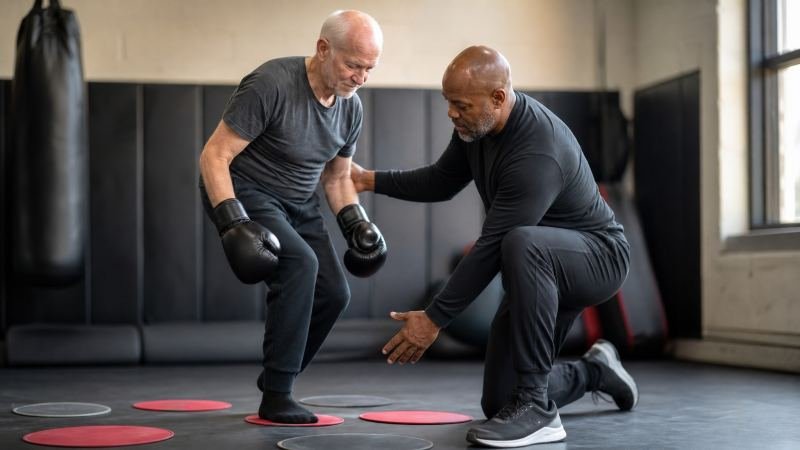
Proprioception gives the brain continuous information about limb position and joint angle. It's the foundation that visual and vestibular inputs get calibrated against. Training protocols challenge these feedback loops systematically: altering surface stability, reducing visual reliance, or introducing conflicting sensory cues to recalibrate the brain's internal map of body position. You learn to assess whether a client's balance deficit comes from poor proprioceptive acuity, faulty sensory weighting, or impaired central integration before you pick a drill.
Assessment-Based Drill Selection
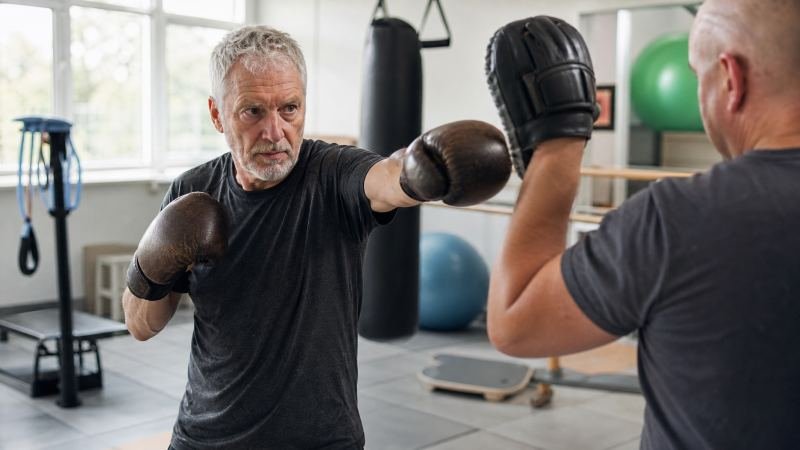
Pre-set routines can't account for the individual variability that defines conditions like Parkinson's or multiple sclerosis. Every session starts with objective assessments of gaze stability, head-eye coordination, and postural sway, to figure out which neural subsystems need stimulation that day. Certified neuro training specialists use real-time vestibular and visual assessments to modify boxing drills mid-session. That keeps things safe and effective for clients with progressive neurological conditions, instead of forcing them through a predetermined sequence regardless of how they're responding.
Martial Arts Meets Neuroscience in Practice
Martial arts have long used cross-body patterning, rhythmic timing, and reactive decision-making, and these align closely with what neuroscience now tells us about motor learning and cerebellar function. Combining martial arts precision with clinical neuro-rehab protocols is its own specialization, one that calls for formal credentialing to protect client safety and program integrity. The fusion demands both elite coaching experience and formal neuro-training education, because translating combat movements into therapeutic interventions means knowing which elements drive neurological adaptation and which just increase physical demand.
Cross-Body Movement Patterns
Movements that cross the body's midline engage both brain hemispheres and strengthen corpus callosum connectivity, supporting motor coordination and cognitive processing. Boxing combinations, defensive slips, and footwork drills naturally build in these patterns, and they provide external pacing cues that help bypass damaged basal ganglia circuits in Parkinson's clients. The martial arts context adds a motivational, emotional dimension that pure clinical exercises often lack. That improves adherence without giving up therapeutic specificity.
Adaptive Boxing for Neurological Conditions
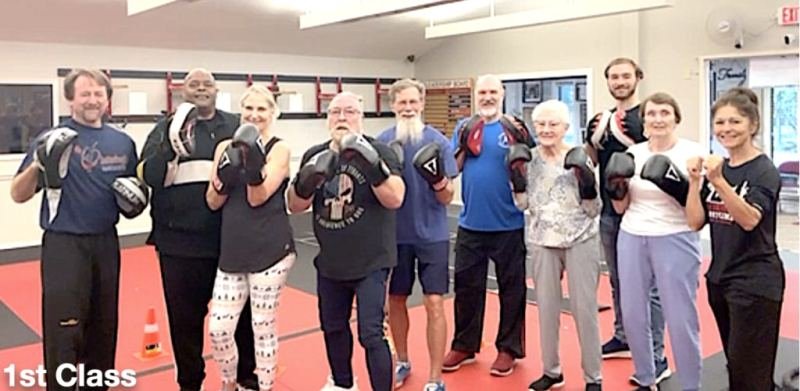
Adaptive boxing programs modify traditional training to accommodate tremor, rigidity, bradykinesia, and cognitive impairment, while preserving the neurological benefits of rhythmic, coordinated movement. Jeff Battenberg maintains active NeuroTraining Institute certification while operating Texas's first Rock Steady Boxing affiliate in Texas, applying cerebellum-centric drills daily with Parkinson's and special needs clients. This is what certified specialists translating theoretical knowledge into safe, effective programming looks like in practice, work that respects both the neurological condition and the person living with it.
Continuing Education Neuro Coaching Requirements
Neuroscience moves fast, and what counted as best practice five years ago may now be incomplete or outdated. Continuing education neuro coaching requirements exist to keep practitioners current on emerging research, refined assessment techniques, and updated safety protocols for neurological populations. Maintaining a NeuroTraining Institute credential in 2026 means documented engagement with ongoing learning, not just resting on initial certification knowledge.
These requirements protect clients by holding coaches accountable to evolving standards of care. They also tell employers, referral sources, and clients that your expertise reflects sustained commitment rather than a one-time educational achievement.
Neurological conditions are complex, progressive, and highly individual. Static knowledge isn't enough for safe, effective long-term coaching, which is exactly why the field keeps raising the bar.
Who Benefits From This Neuro Rehab Fitness Credential
This credential serves distinct audiences with different, overlapping needs. Fitness professionals seeking specialization gain verified competency that sets them apart in a crowded market and qualifies them to serve populations traditional certifications exclude. Caregivers and program directors get a reliable way to vet instructors who'll work safely with vulnerable neurological clients, cutting liability while improving outcomes.
Fitness Professionals Seeking Specialization
Martial artists, boxers, and personal trainers moving into adaptive fitness bring real movement expertise, but they often lack the neurological framework to modify that expertise safely. The certification supplies that missing layer. It turns existing coaching skills into clinically informed interventions, no return to graduate school required. You keep your coaching identity while gaining the credibility and competence to serve clients whose needs go beyond general fitness scope.
Caregivers and Program Directors
Care centers and support organizations face real risk when they hire instructors unprepared for neurological complexity. This credential offers a verifiable standard: documented training hours, practical competency assessments, and ongoing education commitments relevant to your population. It cuts the burden of evaluating individual candidates' qualifications from scratch, while making sure the instructors you hire have validated expertise in the specific methods your clients require.
Verifying Authentic NeuroTraining Institute Credentials
Not all neuro-training certifications carry equal weight. Some programs hand out credentials based on minimal contact hours or purely theoretical coursework, with no practical assessment at all. Authentic NeuroTraining Institute credentials reflect documented training hours, supervised practical competency evaluations, and adherence to continuing education requirements that keep proficiency current. Clients and employers should verify certification status through official channels rather than take self-reported credentials at face value, especially when the population involved makes inappropriate intervention a real risk.
Verification protects everyone by confirming that practitioners have met established standards, not just made marketing claims. It also protects the field itself, by separating rigorous, evidence-based training from superficial adaptations that borrow the terminology without the substance. When you evaluate a practitioner's qualifications, look for specific documentation: assessment competency, supervised practice hours, current continuing education compliance. Generic certificates or attendance records alone don't tell you much.
Neuro With Mr. B provides education and coaching, not medical diagnosis or treatment. For medical concerns, consult a qualified healthcare professional.