In this article
- Why Martial Arts Training for Parkinson's Disease Works Neurologically
- The Black Belt Parkinson's Coach Difference: Credentials Matter
- Boxing and Martial Arts for Tremors: Specific Symptom Management
- Karate for Parkinson's Patients vs. Generic Fitness Programs
- Core Pillars of Effective Neuro-Martial Arts Training
- Finding the Right Program: Safety, Assessment, and Community
- Frequently Asked Questions About Martial Arts and Parkinson's
- Frequently Asked Questions
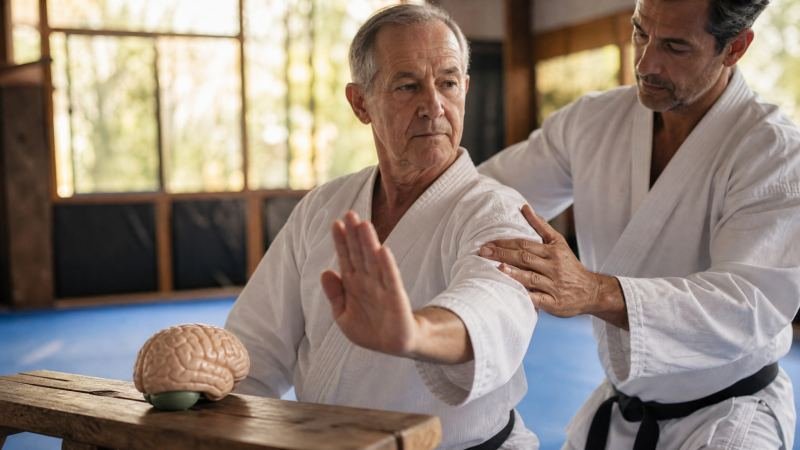
Martial arts training for Parkinson's disease offers something standard physical therapy often cannot: a complex, reactive environment that forces the brain to adapt rather than simply repeat. When you step onto the mat, you are not just exercising muscles. You are engaging neural pathways that have begun to degrade. This approach moves beyond generic fitness to address the specific sensory and motor deficits that define your daily reality.
For adults navigating Parkinson's or other neurological conditions, finding the right coach matters as much as the exercise itself. You need an instructor who understands both the biomechanics of a punch and the neurology of a tremor. Here's why specialized martial arts neuro training works, what credentials actually matter, and how to tell a clinical-grade program from a well-meaning but ineffective fitness class.
Why Martial Arts Training for Parkinson's Disease Works Neurologically
Standard exercise improves cardiovascular health, but it rarely challenges the compromised feedback loops between your eyes, inner ear, and joints that cause balance failures in Parkinson's. According to the NeuroTraining Institute curriculum, effective neuro-martial arts training integrates three sensory systems at once: visual, vestibular, and proprioceptive, rather than focusing solely on cardiovascular output. This multi-system demand is what drives neuroplasticity in ways walking or stationary cycling can't replicate.
Targeting the Cerebellum Through Complex Movement
The cerebellum is your brain's coordination center. It refines movement timing and precision, yet traditional rehab protocols frequently under-target it. Martial arts drills require rapid adjustments to external stimuli, so this region has to process error signals and correct motor output in real time. Repetitive linear motion doesn't offer enough novelty to stimulate these adaptive mechanisms.
You need unpredictable, multi-directional tasks to keep the cerebellum active and responsive. Cross-body patterns and reactive sparring drills create the cognitive load that strengthens these connections. Predictable routines let the brain coast on established, potentially degraded pathways instead.
Visual and Vestibular System Integration
Parkinson's often disrupts the ability to stabilize gaze during head movement, which leads to dizziness and fall risk even when leg strength remains intact. Specific martial arts neuro training uses head-eye dissociation drills to retrain the vestibulo-ocular reflex independent of limb movement. These exercises isolate the sensory deficit directly instead of hoping general strength work will compensate for it.
Generic fitness classes rarely address this integration failure because they prioritize muscle fatigue over sensory recalibration. Without targeted vestibular challenges, your balance may improve while standing still but fail the moment you turn your head walking through a crowded store.
The Black Belt Parkinson's Coach Difference: Credentials Matter
Safety in neuro-rehabilitation takes more than enthusiasm. It demands real understanding of both elite movement mechanics and pathological limitations. Jeff Battenberg combines sixth-degree black belt expertise with NeuroTraining Institute certification, bridging elite martial arts methodology and clinical neuro-rehabilitation. That dual qualification is what keeps a drill biomechanically sound and neurologically appropriate for your current disease stage.
Jeff Battenberg's Path from Sixth-Degree Black Belt to Neuro-Specialist
Decades of martial arts mastery provide the technical foundation, but specialized certification is what turns that skill into therapeutic intervention for vulnerable populations. Understanding how the disease progresses lets a coach adjust intensity instantly without losing the cognitive challenge that adaptation requires. You can review the specific neuro training specialist certification requirements to see the standards required to safely train people with complex neurological profiles.
A standard personal trainer certification doesn't cover the nuances of rigidity, freezing of gait, or autonomic dysfunction common in Parkinson's. Relying on general fitness credentials for neuro-rehab adds unnecessary risk and limits how much symptom management is actually possible.
Bridging Elite Martial Arts Methodology with Clinical Rehab
Neuro With Mr. B was founded as Texas's first Rock Steady Boxing affiliate, setting a precedent for assessment-driven neurological drills in adaptive martial arts. That history points to a long-term commitment to evidence-based practice, not a recent pivot to capitalize on wellness trends. The methodology fuses the discipline of traditional dojo culture with the precision of clinical assessment.
Programs serving Parkinson's clients and special needs adults need modifications that generic fitness certifications simply don't cover. Your training plan should evolve based on regular neurological assessments, not arbitrary calendar milestones or group averages.
Boxing and Martial Arts for Tremors: Specific Symptom Management
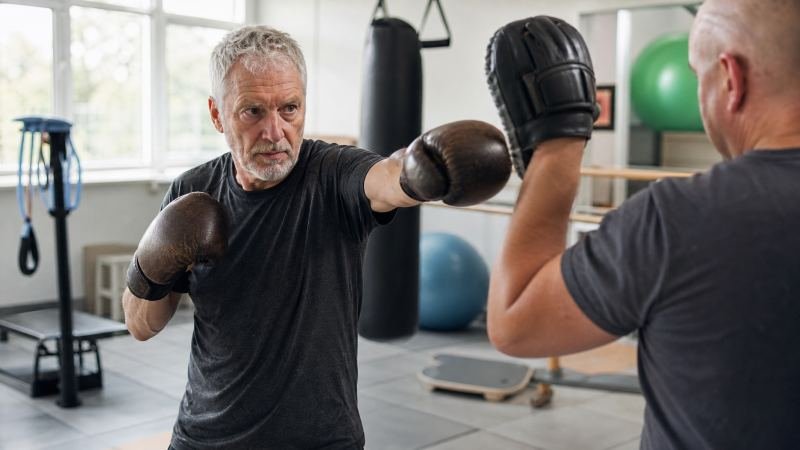
Tremors and rigidity respond differently to rhythmic versus reactive stimuli, so a program needs to blend boxing cadence with martial arts precision rather than pick one. Medication manages chemical imbalances; physical training addresses the mechanical expression of symptoms through targeted sensorimotor input. You deserve a program built around your specific symptom profile, not a blanket protocol applied to every participant.
Rhythmic Auditory Stimulation and Gait Improvement
Boxing rhythm drills use external auditory cues to bypass damaged basal ganglia circuits and make movement initiation smoother. This temporal scaffolding helps reduce freezing episodes by giving your brain an alternative timing signal to lock onto during ambulation. The beat works like a prosthetic for internal rhythm generation, making gait more fluid and less effortful.
Rhythmic auditory stimulation has been shown to improve stride length and walking velocity in Parkinson's patients more effectively than uncued movement. Rhythm alone doesn't solve postural instability, though, which is why it needs to be paired with balance-specific work.
Proprioceptive Drills for Balance and Fall Prevention
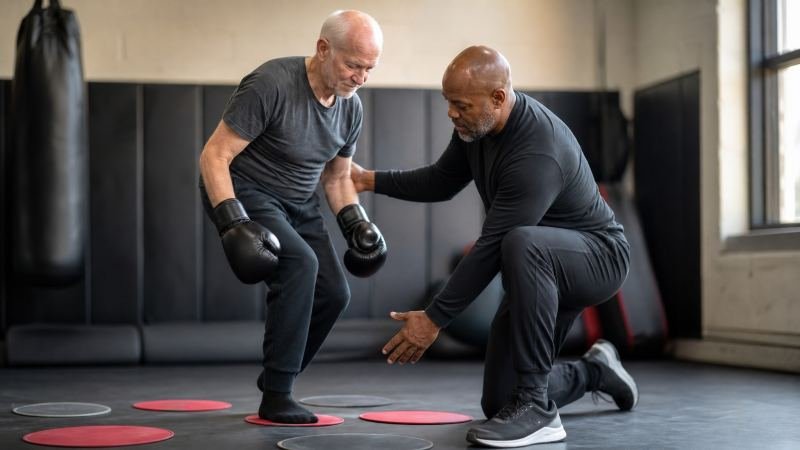
Karate stances and grounded martial arts footwork increase joint position awareness, directly countering the proprioceptive loss behind unexplained falls. These static and dynamic holds force your body to map its position in space without relying only on vision. You build an internal reference frame that holds up even in low light or when you're multitasking.
Fall prevention isn't about strengthening legs in isolation. It's about improving the speed and accuracy of your corrective responses. Reactive balance drills simulate real-world perturbations safely, teaching your nervous system to recover stability before a stumble becomes a fall.
Karate for Parkinson's Patients vs. Generic Fitness Programs
Adaptive martial arts programs differ from senior fitness classes at the root: they prioritize cognitive engagement over caloric expenditure or flexibility. If you want gentle stretching and socialization, a senior center class may suffice, but it won't drive the neuroplastic changes that slow functional decline. True neuro-training demands mental effort alongside physical exertion to remodel neural pathways.
Understanding the differences between Rock Steady Boxing and regular classes clarifies why specialized programming produces better outcomes for neurological conditions. Generic classes often lack the assessment-driven progression models needed to match drill complexity with your fluctuating capacity. Static routines eventually become automatic, and automatic movement stops giving your brain the novel challenge it needs.
Assessment-driven programming adjusts daily based on your sleep quality, medication cycle, and stress levels, not a rigid syllabus. That responsiveness prevents overtraining on bad days and makes the most of good ones, which helps both retention and safety over the long run.
Core Pillars of Effective Neuro-Martial Arts Training
Effective training rests on components that aren't optional: they keep you safe while maximizing the neurological return on your effort. Expect every session to integrate visual tracking, vestibular challenges, and proprioceptive feedback loops in varying combinations. Drop any one of these pillars and the intervention becomes mere exercise, not true neuro-rehabilitation.
Cross-Body Patterns and Cognitive Load
Movements that cross the midline force communication between brain hemispheres, improving coordination and executive function at the same time. These patterns mimic natural human locomotion and daily tasks far better than unilateral machine exercises ever could. Adding cognitive tasks like counting or verbal responses during movement raises training density without adding dangerous physical load.
Dual-task training mirrors the real-world demands that typically trigger Parkinsonian symptoms, building resilience in the exact contexts where you struggle most. Train physical and cognitive skills separately, and you won't be ready for the simultaneous processing demands of navigating a kitchen or crossing a street.
Assessment-Driven Progression Models
Your neurological baseline shifts daily, so training intensity has to shift with it to stay effective and safe. Regular standardized assessments track reaction time, balance confidence, and dual-task cost to guide programming decisions objectively. Feeling like you "worked hard" isn't a reliable marker of neuro-rehab progress.
Progression should track demonstrated competency in foundational skills, not time spent in class. Advance too quickly and you build compensatory movement patterns that undermine long-term progress and raise injury risk.
Finding the Right Program: Safety, Assessment, and Community
Choosing a program means evaluating instructor qualifications, safety protocols, and whether the philosophy actually lines up with neuro-rehab principles. Ask direct questions about assessment frequency, emergency procedures, and continuing education in neurological disorders before committing. A qualified instructor welcomes this scrutiny, because trust comes from verifiable competence.
What to Look for in a Qualified Instructor
Seek coaches who hold recognized neuro-training certifications alongside their martial arts rankings; that combination signals relevant expertise. Verify their experience specifically with Parkinson's or similar neurological conditions, not just general aging populations. Watch a class and see whether corrections focus on movement quality and safety, rather than just intensity or form aesthetics.
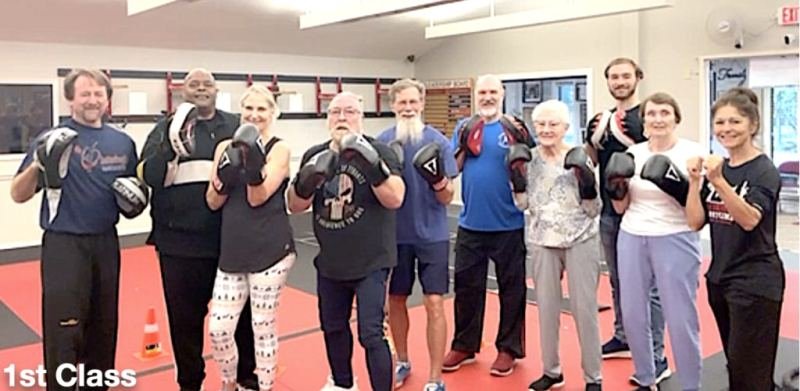
Community matters, but never at the expense of clinical appropriateness for your specific condition. A supportive group can't make up for instruction that ignores your neurological vulnerabilities or pushes unsafe progressions.
Starting Your Journey with Neuro With Mr. B
As a Rock Steady Boxing affiliate in Texas with a specialized neuro-training focus, Neuro With Mr. B carries out the standards above through decades of service. Jeff Battenberg's background means you get coaching that respects both your martial arts goals and your medical reality. The program welcomes inquiries from people ready for serious, assessment-driven training.
Reach out to schedule a personalized consultation and find out if this methodology fits your current goals and capabilities. Taking the first step toward specialized training starts with an honest conversation about where you are and where you want to go.
Frequently Asked Questions About Martial Arts and Parkinson's
Common concerns about safety, timing, and expectations deserve straightforward answers grounded in clinical experience, not marketing promises. Your hesitation is valid, and addressing it directly is part of responsible coaching. The following points cover practical aspects of starting neuro-martial arts training.
Frequently Asked Questions
Is martial arts training safe for someone with advanced Parkinson's?
Safety depends entirely on individualized assessment and modification rather than disease stage alone. A qualified neuro-coach adjusts drills to match your current mobility, cognition, and autonomic function regardless of diagnosis severity. Always undergo a comprehensive evaluation before starting to establish appropriate baselines and contraindications.
How soon will I see improvements in balance or tremors?
Neurological adaptation typically requires consistent training over several weeks before measurable changes appear in daily function. Some participants report subjective improvements in confidence and body awareness within the first few sessions. Objective gains in gait speed or balance scores generally emerge after eight to twelve weeks of regular, assessment-driven training.
Do I need prior martial arts experience to start?
No previous experience is necessary because adaptive programs teach movement fundamentals specifically for neurological rehabilitation. Instructors break down complex techniques into manageable components scaled to your current abilities. The focus remains on therapeutic benefit rather than traditional belt advancement or competitive performance.
Can I combine neuro-martial arts with my existing physical therapy?
Yes, and coordination between providers often enhances outcomes when communication channels remain open. Share your training plan with your physical therapist to ensure complementary rather than conflicting interventions. Many clients find that martial arts reinforces clinic-based strategies through higher repetition and contextual application.
Neuro With Mr. B provides education and coaching, not medical diagnosis or treatment. For medical concerns, consult a qualified healthcare professional.