In this article
- How Adaptive Martial Arts Changes for Special Needs Adults
- Sensory and Communication Considerations for Adult Students
- Special Needs Martial Arts Classes: How an Adult Session Is Structured
- Measurable Goals in Adaptive Fitness Martial Arts
- Caregiver Involvement: Roles for Families and Care Centers
- Adaptive Self-Defense for Adults: Setting Realistic Goals
- Choosing Martial Arts for Adults With Disabilities: Questions for a Coach
- Frequently asked questions
Most martial arts pages for people with disabilities are written about children. Adults arrive with something different: years of history with their own bodies, work or day-program schedules to fit around, firm opinions about being touched, and a reasonable dislike of being talked to like a kid.
This guide shows how Jeff Battenberg, a 6th-degree black belt and neuro-training specialist, builds adaptive martial arts for special needs adults. It covers the room, the first session, the goals he tracks and the questions you should put to any coach.
How Adaptive Martial Arts Changes for Special Needs Adults
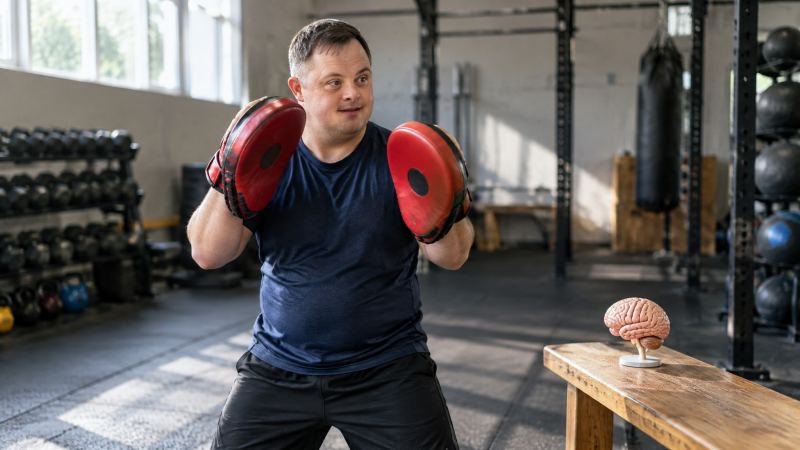
The core mechanics stay. Stance, striking, blocking and escaping are the same skills for every adult in the room, and what changes is the setup around them: the pacing, the target height, the contact level and whether the student works seated, standing or from a mobility device.
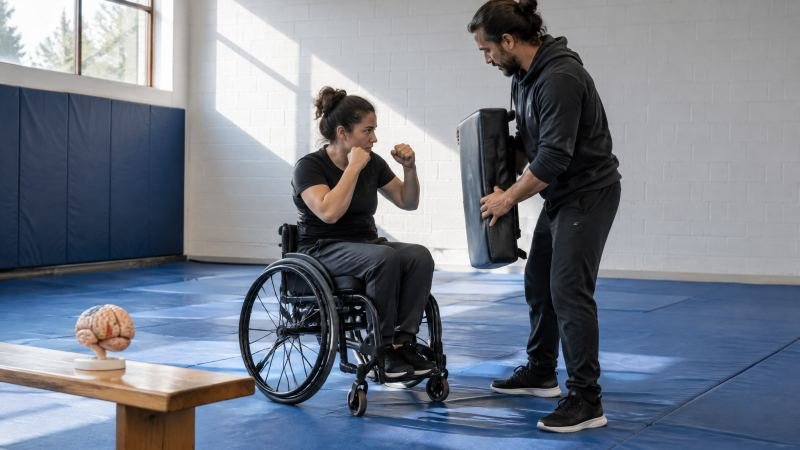
Take an adult who uses a wheelchair. That student can practice the same guard, strike and redirect pattern as a standing student, while the coach changes target height, reach and body reference points and leaves the principle alone.
Adults also bring things a children's class never has to handle.
- History. Past injuries, past sports, and years of having movement directed by other people all shape how a student responds to instruction.
- Schedules. Sessions have to fit around work, day programs and transport, so a class that runs on a fixed, predictable rhythm usually works better than one that shifts.
- Consent. The adult gives it, personally, before any partner contact. A guardian is involved only where one legally holds that role.
- Framing. Drills are described in adult terms, with real purpose attached. Sticker charts and playground language have no place here.
Adaptive Karate for Adults: What Carries Over
People search for adaptive karate for adults, and the useful answer is about mechanics rather than a style name. A clean stance, a guard that protects the body and a strike that travels in a straight line are the same lessons in any tradition, so they carry over into an adaptive format.
Cross-body patterns carry over too. Pairing a left hand with a right foot, or stepping while the opposite arm guards, asks both sides of the brain and body to coordinate, and that is one of the three training pillars Jeff builds around.
The same logic applies to other adult groups. If you want to see how it adapts for another population, read about neuro training for adults with Down syndrome.
Sensory and Communication Considerations for Adult Students
Sensory planning covers the room, the equipment, the touch rules and the way instructions are delivered. Any one of these can decide whether an adult stays engaged through a session or quietly shuts down by minute ten.
The reason sits in neurophysiology. The cerebellum contributes to movement timing and error correction, and the vestibular system supports balance and spatial orientation, so a room that overloads the senses makes those systems work harder for less return. That is why sensory load and drill dosage matter as much as technique.
Planning the Room and Routine for Sensory Load
A good room removes avoidable noise from the senses so the student can spend effort on the movement. Jeff's setup checklist looks like this:
- Even lighting, with no flicker and no harsh glare off the floor.
- Sound control, because echo and background noise compete with instructions.
- Mat texture and footwear chosen with the student, since feet supply proprioceptive information and some adults cannot tolerate certain surfaces.
- Visible boundaries, such as taped lines, so every student knows where the working space ends.
- A quiet exit that anyone can use without explaining themselves.
- A predictable routine, so the order of the session is never a surprise.
Each item ties back to a pillar. Visual and vestibular input depend on stable light and a stable surface, and proprioception depends on what the feet and hands actually feel. You can lower the load for a student by changing one of these at a time and watching what happens.
A quiet exit is not a sign of failure, and using it is a skill worth praising.
Communication That Keeps Adults Engaged
Give one instruction at a time. Then deliver it in three ways together: a spoken word, a demonstrated gesture and, where it helps, a picture card. A student who processes language slowly can lean on the gesture, and a student who reads faces poorly can lean on the picture.
Some adults use augmentative communication devices, and those devices stay within reach during class. The coach waits for the response rather than filling the silence.
Touch gets its own rule. The coach asks directly, and the adult answers for themselves, before any hand adjusts a stance or a partner drill begins.
Martial arts for adults on the autism spectrum works best when the coach treats the profile as a set of questions, not a script. One autistic adult needs a dim room and no surprises, another needs clear verbal feedback, and a third has no sensory issues at all. The same goes for adults with intellectual disability, cerebral palsy or acquired brain injury, so the intake conversation matters more than the diagnosis on a form.
Special Needs Martial Arts Classes: How an Adult Session Is Structured
A session follows a skeleton that repeats, because repetition is what lets an adult predict what comes next and relax into the work. Content inside the skeleton moves forward as the student does, and the frame itself stays put.
What the First Session Looks Like
The first session runs in a fixed order:
- Intake check. Jeff confirms the communication profile, sensory triggers, any medical notes and what the student wants from class.
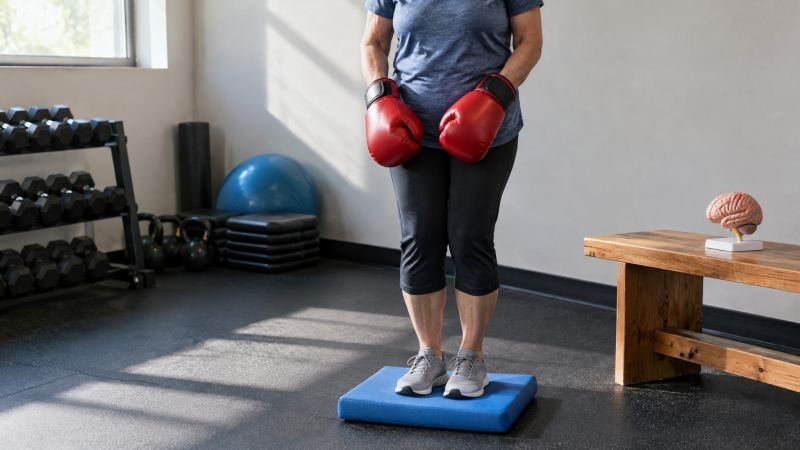
- Neuro-training warm-up. Visual tracking, balance input and cross-body movement prepare the nervous system before any striking. If you want the balance side explained in detail, see vestibular training exercises for adults.
- Short skill blocks. Stance, guard and one or two strikes, each in a block short enough to finish while attention is still fresh.
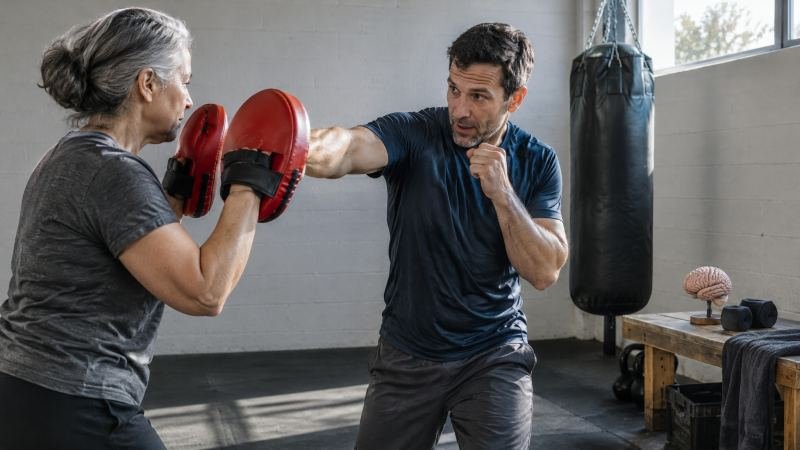
- Graded partner work. This happens only with consent, and it starts with the lightest possible contact.
- Debrief. The student and coach record one agreed marker, such as how steady the stance felt or how many steps of a combination came back without a prompt.
Later sessions keep the same skeleton. Only the skill blocks and the partner work change.
Grouping, Pacing and Progression for Adult Students
One-to-one sessions suit onboarding, and they suit any adult whose sensory load is high enough that a group would get in the way of learning. Once a student is settled, small groups sorted by skill and by comfort with contact work well, because nobody is asked to match a pace or a touch level that does not fit.
Progression is not a straight line to standing. A student may move between seated and standing variants as the baseline allows, and a bad week can mean going back to a seated version of a drill without any loss of standing in the class. Pacing follows the person you are coaching, not a calendar of belts.
Measurable Goals in Adaptive Fitness Martial Arts
Measurable here means a few observable markers, recorded the same way each time and re-checked on a schedule everyone has agreed. It does not mean a long assessment form or a test the student can fail in front of peers.
The honest limit is that these markers describe method, not guaranteed results. Progress differs between adults, and this approach does not replace medical care or therapy.
Recording a Starting Baseline
The baseline comes early, in the first sessions, and it covers three things:
- Balance during stance changes. How steady the student stays when shifting from a ready stance to a guard, or from seated to standing.
- Sequence recall. How much of a short combination the student can repeat without prompts.
- Clean repetitions under guidance. How many repetitions of a movement hold their form with coaching.
Where a physical therapist is already involved, Jeff borrows the measures the clinician uses, so both sets of records line up. For the timing and error-correction side of balance, cerebellum-focused balance drills explain what the drills are targeting.
Confidence and Focus Gains You Can Observe
Confidence and focus are easy to claim and hard to verify, so treat them as behaviors you can watch for. An adult who asks for a break when they need one is practicing self-advocacy. One who returns to a drill after a mistake is building tolerance for error, and one who stays with a task through a full block is building focus.
Write these down in plain words after each session, next to the agreed marker. After a few weeks you and the coach will have a record that shows direction, which is more useful than a feeling.
Caregiver Involvement: Roles for Families and Care Centers
Caregivers and care-center staff contribute most before the first session. They know the adult's communication profile, sensory triggers and routines, and the coach cannot learn those from watching one class.
For a fuller intake and communication checklist, there is a caregiver guide to adaptive fitness. Staff arranging a program for several residents can read the care center guide to group home fitness.
Partner-contact choices are confirmed with the adult directly, and with a legal guardian where one holds that role. An adult with a medical or orthopedic concern confirms readiness with their own clinician before starting.
What Families and Staff Should Share at Intake
Bring the communication profile first: how the adult says yes, no and stop, and whether a device, a gesture or a picture card carries that message. Then share sensory triggers and the daily routine, including medication timing and the hours when the adult is usually at their best.
Finally, agree with the coach on progress reporting. Decide what gets recorded, how often it is shared and who receives it, so the update you get after week four is the one you expected.
Adaptive Self-Defense for Adults: Setting Realistic Goals
Adaptive self-defense for adults starts well before any physical contact. It builds awareness of surroundings, verbal boundaries that the student can say clearly, distance management and escapes from holds, and the escapes are practiced under graded, consented pressure that rises only when the student signals readiness.
A class like this builds skills and confidence, but it cannot guarantee an adult's safety. Anyone who promises that is selling something the training cannot deliver, and you should treat that promise as a warning sign.
The verbal side often matters most. Practicing a firm "stop" or "no" in a calm room, with a coach who listens, gives an adult a rehearsed response for a stressful moment.
Choosing Martial Arts for Adults With Disabilities: Questions for a Coach
Judge a program by what the coach can explain. Ask how each adaptation works and why it was chosen, how the sensory setup is handled, how progress is measured and how caregivers are updated. Then watch whether the adult is asked for consent directly, rather than through a parent or support worker.
A coach who answers clearly and specifically is showing you how they will teach. If you are still comparing options, special needs adult fitness programs near you is a place to start, and you can check what the neuro-training specialist credential covers against any coach's claims.
Credentials and Experience to Check
Jeff Battenberg's background, stated plainly:
- 6th-degree black belt.
- Neuro-training specialist.
- Founder of Texas's first Rock Steady Boxing affiliate, a non-contact boxing program for people with Parkinson's.
- Ongoing certification through the NeuroTraining Institute.
- Experience coaching Parkinson's clients and special needs adults, using martial arts, boxing and assessment-driven neurological drills.
If you are a caregiver, a care-center team member or an adult considering class for yourself, contact Neuro With Mr. B and talk through whether an adaptive class fits the adult's goals, sensory profile and communication style.
Frequently asked questions
Do adults need martial arts experience before starting an adaptive class?
No. The first session begins with an intake check and a neuro-training warm-up, then moves into short skill blocks at a pace set by the student. Prior experience is not required, and a student who is new to training starts with stance and guard before anything else.
Can an adult who uses a wheelchair take part?
Yes. The core mechanics of guard, strike and redirect stay the same, and the coach adjusts target height, reach and body reference points. Seated and mobility-device variants are part of the program, not a lesser version of it.
Will my adult child or the person I support be touched without warning?
No. The coach asks the adult directly before any touch, and partner work happens only with consent and starts with the lightest contact. Where a legal guardian holds that role, the guardian is involved in the contact decisions as well.
How will we know whether the class is helping?
The coach records a baseline early, then re-checks a few observable markers on an agreed schedule. Typical markers are balance during stance changes, recall of a short combination and self-advocacy, such as asking for a break. These describe method and direction of progress, not a guaranteed outcome.
Does adaptive self-defense guarantee an adult will be safe?
No class can promise that. Training builds awareness, verbal boundaries and escapes from holds under graded, consented pressure, which gives an adult more skills and more confidence. It does not remove risk.
Neuro With Mr. B provides education and coaching, not medical diagnosis or treatment. For medical concerns, consult a qualified healthcare professional.