In this article
- Why Neuro Training Is the Next Frontier in Fitness CEUs
- Core Pillars of Neuro-Training Fundamentals for Trainers
- Martial Arts Meets Neuroscience: A Unique CE Pathway
- Navigating Certification Routes and Mentorship Opportunities
- Specializing in Parkinson's and Special Needs Populations
- Building a Sustainable Neuro-Coaching Practice
- Frequently Asked Questions
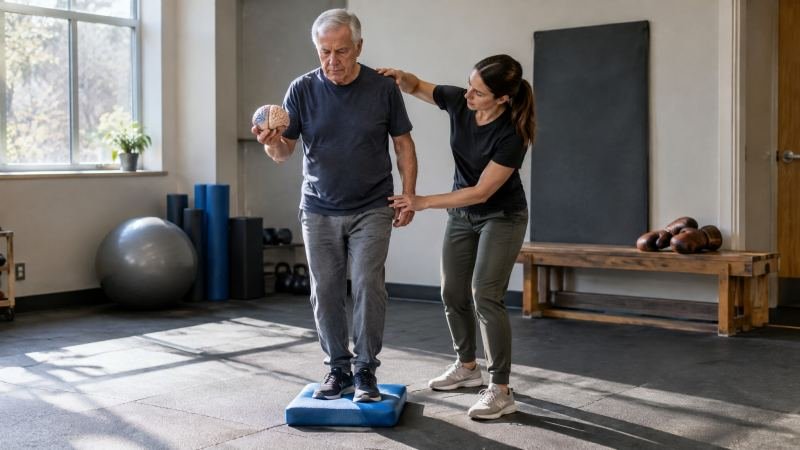
Most fitness professional continuing education neuro training options focus on general population metrics or orthopedic correction. That leaves a massive void for coaches serving clients with neurological conditions. Standard personal training certifications typically dedicate minimal curriculum time to neurological conditions, which leaves a real competency gap for trainers working with aging populations who need more than strength work. Dedicated professionals end up seeking specialized trainer certification in neuro rehab through alternative pathways that blend clinical science with practical coaching application.
Neuro With Mr. B exists to bridge that divide, offering mentorship and workshops rooted in decades of martial arts mastery and clinical neuro-training experience. Jeff Battenberg holds dual credentials as a 6th-degree black belt and a NeuroTraining Institute certified specialist, a combination that fuses elite martial arts coaching with clinical neuro-rehab drills meant to translate to client outcomes. If you're a trainer or martial artist looking to serve Parkinson's clients or special needs adults effectively, understanding this specific educational trajectory is your first step toward legitimate expertise.
Why Neuro Training Is the Next Frontier in Fitness CEUs
The fitness industry has saturated the market with biomechanics courses. The demographic shift toward an aging population demands a different skill set entirely. You can't serve a client with Parkinson's disease or traumatic brain injury using only the corrective exercise strategies built for healthy twenty-year-olds, because their nervous systems need fundamentally different inputs to adapt. Effective neuro coaching calls for assessment-driven drill selection targeting the cerebellum and vestibular system, not just high-intensity interval training marketed as brain health.
Moving Beyond Musculoskeletal Coaching
Traditional coaching models assume a functioning nervous system that just needs stronger muscles or better joint mobility to improve performance. Neurological conditions disrupt the signal itself. Strengthening the hardware does nothing if the software can't process the command efficiently, and trainers who rely only on musculoskeletal frameworks often hit a wall when clients show no improvement despite perfect form and consistent effort.
This limitation isn't a failure of programming. It's a failure of scope.
Neuro training addresses the sensory-motor loop directly. It teaches coaches to identify whether a balance deficit stems from visual processing, vestibular dysfunction, or proprioceptive loss rather than weak ankles. Without that diagnostic layer, well-intentioned trainers risk prescribing exercises that frustrate clients or reinforce compensatory patterns that speed up decline.
The Demand for Specialized Trainer Certification in Neuro Rehab
Clients and caregivers are getting more sophisticated about what counts as effective neurological rehabilitation, and they can tell the difference between generic senior fitness and targeted neuro-coaching. A specialized trainer certification in neuro rehab signals to referral sources and families that you have specific competencies beyond standard liability insurance and CPR certification. That distinction matters when you're working with vulnerable populations, where safety and efficacy aren't negotiable.
The marketplace doesn't have enough qualified practitioners to meet the rising demand for adaptive fitness programs that address cognitive and motor symptoms at once. Fitness professionals who invest in this niche now put themselves at the front of a growing field instead of competing in an oversaturated general fitness market. Your ability to describe specific neurological mechanisms to physicians and therapists will drive your referral volume more than any marketing budget could.
Core Pillars of Neuro-Training Fundamentals for Trainers
Neuro training isn't a collection of random coordination games. It's a systematic approach to stimulating specific neural pathways through precise sensory input. Every drill targets a distinct subsystem within the central nervous system, and applying these stimuli without proper assessment is clinically irresponsible. Founding Texas's first Rock Steady Boxing affiliate offers a real-world case study in building a specialized practice for Parkinson's clients through evidence-based boxing fitness that respects these physiological boundaries.
Visual, Vestibular, and Proprioceptive Integration
The brain builds balance and movement from three data streams: vision, vestibular input from the inner ear, and proprioception from joints and muscles. When one system degrades from disease or injury, the brain has to reweight its reliance on the remaining inputs, a process that needs targeted practice rather than passive compensation. Trainers have to assess each system independently before integrating them into complex movements. Otherwise they're guessing at the root cause of dysfunction.
Specific vestibular training protocols can restore gaze stability and cut dizziness in ways traditional balance pads never will. These drills involve controlled head movements while the client holds visual fixation, progressively challenging the vestibulo-ocular reflex to recalibrate its gain. Skip this foundational assessment phase, and the programming that follows is largely speculative, potentially counterproductive for clients with unresolved vestibular hypofunction.
Cerebellum-Centric Drills for Balance and Coordination
The cerebellum acts as the brain's error-correction mechanism, constantly comparing intended movement with actual sensory feedback to refine motor output. Neurodegenerative conditions often impair this comparison process, which produces the tremors, ataxia, and timing deficits that mark many movement disorders. Drills that emphasize rhythm, precision, and rapid directional changes stimulate cerebellar plasticity more effectively than slow, repetitive strength exercises.
These interventions need careful dosing, because the cerebellum fatigues quickly and responds poorly to excess volume. A trainer has to catch the subtle signs of neural fatigue, like rising tremor amplitude or degraded movement quality, and adjust the session in real time instead of pushing through based on arbitrary rep counts. Understanding this threshold separates therapeutic neuro-coaching from recreational activity that merely occupies time without driving adaptation.
Martial Arts Meets Neuroscience: A Unique CE Pathway
Martial arts have trained human movement for centuries, but translating those traditions into clinical neuro-rehabilitation means stripping away sport-specific goals to isolate the underlying motor principles. You aren't teaching someone to fight. You're using fighting mechanics as a vehicle to deliver high-value sensory input to a compromised nervous system, and that distinction defines the difference between a boxing class for seniors and a legitimate neuro training workshop for trainers seeking martial arts instructor CEU neuro credentials.
Applying Cross-Body Patterns to Cognitive Function
Contralateral movements that cross the body's midline force communication between the brain's hemispheres through the corpus callosum, engaging neural networks involved in both motor control and executive function. Cross-body coordination drills drawn from martial arts kata give structured, repeatable patterns that challenge this integration safely and progressively. These patterns activate cognitive resources far beyond what isolated limb exercises can reach, which makes them potent tools for addressing the bradykinesia and cognitive slowing common in Parkinson's disease.
The complexity of these patterns has to scale precisely to the client's current capacity, or it risks triggering frustration or shutdown responses. Trainers learn to regress patterns to their component parts and rebuild them systematically, making sure of success at each stage before adding layers of difficulty. This pedagogical skill takes years to develop. It can't be picked up in a weekend seminar.
Boxing and Rhythm as Neurological Interventions
Rhythmic auditory stimulation uses the brain's natural entrainment response to external beats, bypassing damaged basal ganglia circuits to help movement initiation happen more smoothly. Boxing combinations carry inherent rhythmic structure while demanding simultaneous attention to footwork, guard position, and punch accuracy, which creates a rich multi-sensory environment for neuroplastic change. Martial arts applications for Parkinson's show how these old movement forms translate into modern therapeutic interventions when taught with clinical intent.
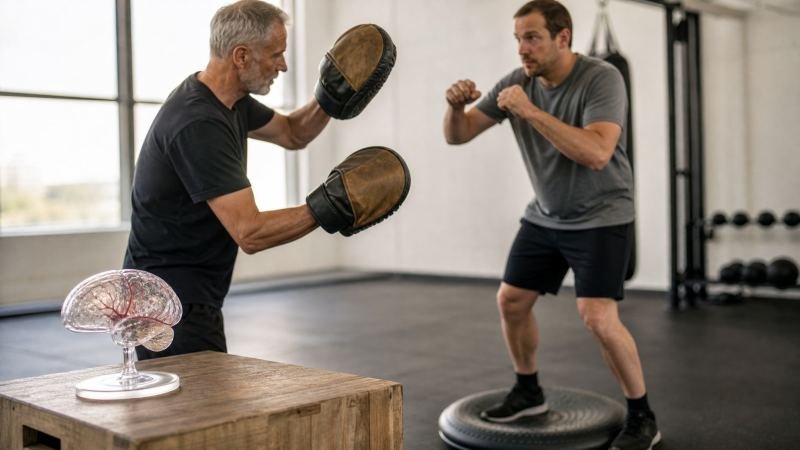
Teaching boxing for neurological rehabilitation differs fundamentally from teaching it for sport or general fitness. The coach prioritizes movement quality and symptom management over power output or cardiovascular intensity, constantly adjusting stance width, punch speed, and combination length to match fluctuating neurological capacity. This adaptive expertise is what turns a fun workout into a sustainable therapeutic modality.
Navigating Certification Routes and Mentorship Opportunities
Finding legitimate fitness professional continuing education neuro training means navigating a landscape full of unregulated certificates and superficial weekend courses. You deserve a pathway that combines rigorous theoretical grounding with extensive supervised practice under mentors who have built successful practices serving these populations. The journey from generalist to specialist is neither quick nor easy, but the right guidance makes it achievable and professionally rewarding.
Jeff Battenberg's Journey from Black Belt to Neuro Specialist
Jeff Battenberg didn't arrive at his current expertise through a single certification. He built it over decades, integrating elite martial arts achievement with formal neuro-training education. His path included earning a 6th-degree black belt while pursuing certification through the NeuroTraining Institute, which let him test theoretical concepts against thousands of hours of real-world coaching experience. Those interested in the specifics of this credential can review the neuro training specialist certification details to understand the depth real practice requires.
This dual-track development produced a methodology that honors both the artistry of martial movement and the precision of clinical neuroscience. Trainers seeking similar integration benefit from mentorship that addresses both domains rather than forcing a choice between them. Real expertise comes from sustained engagement with both communities, not from collecting certificates in isolation.
Finding Quality Neuro Training Workshops for Trainers
Legitimate workshops prioritize hands-on assessment practice and live client interaction over lecture-heavy formats that treat neurology as purely academic content. Look for programs that require pre-coursework on foundational anatomy, so contact hours go toward skill acquisition rather than basic terminology. Programs that offer post-workshop mentorship or community support signal commitment to long-term practitioner development rather than transactional certificate distribution.
Ask potential providers about their own clinical experience with neurological populations before you enroll. Instructors who have never managed a client with freezing gait or dyskinesia can't teach you the real-time decision-making skills that define competent neuro-coaching. Verify that any continuing education credits offered carry recognition from reputable certifying bodies in your profession, so your investment carries professional weight.
Specializing in Parkinson's and Special Needs Populations
Serving neurological populations ethically means acknowledging this work isn't for everyone, and that some clients need medical supervision beyond a trainer's scope. Fitness CEU Parkinson's specialty credentials should include explicit training on medication timing effects, autonomic dysfunction recognition, and fall risk stratification that goes well beyond standard safety protocols. Try to serve these clients without that specific preparation, and you risk harm regardless of your general fitness expertise or good intentions.
Fitness CEU Parkinson's Specialty Requirements
Parkinson's disease presents unique challenges, including ON/OFF fluctuations, freezing episodes, and impulse control disorders that require specialized screening and programming modifications. A legitimate fitness CEU Parkinson's specialty teaches trainers to recognize prodromal signs of deterioration during sessions and communicate effectively with neurologists about observed changes. This level of competency protects both client and trainer while allowing real progress within safe parameters.
Documentation standards for neurological populations differ significantly from general fitness record-keeping. Trainers have to track symptom variability alongside traditional metrics to show value to healthcare partners and justify continued participation to payers. Learning this documentation language opens doors to integrated care arrangements that sustain both client access and business viability.
Adapting Drills for Diverse Neurological Profiles
Special needs adults present just as wide a range of profiles, each requiring individualized adaptation rather than a programmatic template. Sensory sensitivities, communication differences, and behavioral considerations demand flexibility that standardized curricula rarely address well. Experience with this population develops through sustained exposure and mentorship rather than coursework alone, which makes apprenticeship models especially valuable for aspiring specialists.
Neuro-coaching alternatives to traditional boxing expand the toolkit for clients who can't tolerate striking activities or group environments. Some individuals respond better to tai chi, dance-based interventions, or equipment-assisted rhythmic training, depending on their specific symptom profile and personal history. Versatility in modality selection is what separates mature practitioners from those locked into a single program model regardless of client fit.
Building a Sustainable Neuro-Coaching Practice
Adding neuro-training services builds business resilience through deep client relationships and referral network integration rather than high-volume turnover. Clients with neurological conditions often train consistently for years when they experience real symptom management and functional improvement, which provides stable revenue that buffers against seasonal fitness industry swings. This sustainability comes from clinical competence and community trust, not aggressive sales tactics or trendy programming cycles.
Your impact extends past individual sessions to reshape how local healthcare systems view fitness professionals, as legitimate partners in neurological care. Physicians refer patients to trainers they trust to observe and report meaningful changes, creating a cycle of collaboration that benefits everyone involved. Building this reputation takes time and consistent demonstration of specialized expertise, but it builds a practice foundation competitors can't replicate through marketing alone.
Frequently Asked Questions
What makes neuro-training CEUs different from standard fitness continuing education?
Standard fitness CEUs focus primarily on musculoskeletal biomechanics and general population programming, while neuro-training education targets sensory-motor integration and neurological adaptation. Neuro-training coursework teaches assessment of visual, vestibular, and proprioceptive systems alongside drill prescription specifically designed for compromised nervous systems. This specialized focus prepares trainers to serve clients with Parkinson's, TBI, and other neurological conditions that standard certifications do not address.
How do martial arts principles integrate with clinical neuroscience in trainer education?
Martial arts provide structured movement patterns like cross-body coordination and rhythmic striking that naturally stimulate neuroplasticity when taught with clinical intent rather than sport-specific goals. Trainer education translates these traditional movements into assessment-driven interventions targeting specific neural pathways affected by neurological conditions. The integration preserves the richness of martial movement while applying neuroscience principles to ensure safety and therapeutic efficacy for vulnerable populations.
Why are visual and vestibular assessments necessary before prescribing neuro drills?
Balance and coordination deficits stem from specific sensory system failures that require targeted intervention rather than generic strengthening. Without assessing which system is impaired, trainers risk prescribing drills that fail to address the root cause or inadvertently reinforce compensatory patterns. Proper assessment ensures drill selection matches the client's actual neurological needs, making programming efficient and safe rather than speculative.
What certification pathways exist for trainers specializing in Parkinson's or neuro rehab?
Legitimate pathways include certification through organizations like the NeuroTraining Institute combined with condition-specific programs such as Rock Steady Boxing coaching credentials. These should include substantial hands-on assessment practice, supervised client interaction, and post-certification mentorship rather than weekend-only formats. Trainers should verify that credentials are recognized by relevant professional bodies and that instructors have documented clinical experience with neurological populations.
How can fitness professionals find legitimate mentorship in neuro-training methodologies?
Seek mentors who maintain active practices serving neurological populations and can demonstrate client outcomes beyond certificate completion. Legitimate mentorship includes supervised practice hours, case review sessions, and ongoing support rather than one-time workshop attendance. Professional organizations, university-affiliated programs, and established neuro-coaching brands often offer structured mentorship pathways that combine theoretical education with practical skill development under experienced guidance.
Neuro With Mr. B provides education and coaching, not medical diagnosis or treatment. For medical concerns, consult a qualified healthcare professional.