In this article
- Why Best Exercise Lists Miss the Chronic Pain and Balance Link
- How Chronic Pain and Balance Problems Connect Through the Nervous System
- Movement Therapy for Chronic Pain: Low-Impact Work as the Base
- Neuro Drills for Chronic Pain Relief: What Each Training Pillar Targets
- Chronic Pain Balance Training Starts With an Assessment
- When to Get Medical Clearance Before You Start
- Book a Balance and Coordination Assessment
- Frequently asked questions
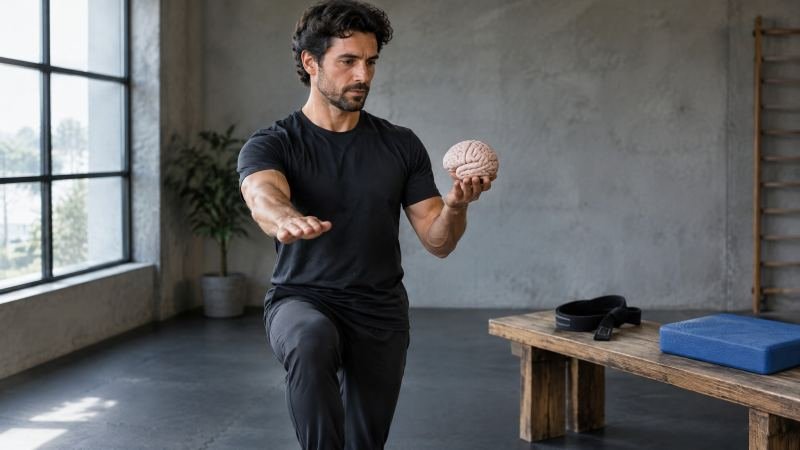
No single move is the best exercise for chronic pain and balance issues. The better answer is a layered approach: a gentle low-impact base, strength work that supports stability, and neuro-training that works directly on the systems that keep you upright when pain has changed how you move.
That layering matters because pain and balance are not separate problems. They share wiring.
I'm Jeff Battenberg, a sixth-degree black belt and neuro-training specialist, and this is the framework I use with clients who live with pain, balance loss, or both.
Sometimes, "Chronic" Pain is just the brains way of telling you that there are signals not being sent through the body correctly.
A 30 minute Trial session for $79 (with a 50% Money Back Guarantee if no improvements) is the perfect way to see if your 'signals' can be improved!
Why Best Exercise Lists Miss the Chronic Pain and Balance Link
Most lists of the best exercises for pain and balance recommend the same things, and those things are not wrong. Walking, swimming, and gentle stretching are sensible starting points for a body that hurts. Standing on one leg, the heel-to-toe walk, step-ups, and figure-eight walking are all real balance drills that I use myself.
The trouble is how the lists work. They rank moves from best to worst, as if the right move were a matter of picking the winner, and they treat balance as a leg-strength problem that a few stance drills will fix.
Persistent pain changes the picture. It can alter how accurately you sense where your limbs are, and it can make your muscles guard and brace in ways you no longer notice. A list cannot tell whether your wobble comes from weak hips, a dulled position sense, a sensitive inner ear, or a body that tenses against pain every time you shift weight, and each of those calls for a different starting point.
A list also cannot adjust itself when your pain flares. If you have followed one and felt worse or less steady, the exercises were probably not the problem; the match between the exercises and your nervous system was.
How Chronic Pain and Balance Problems Connect Through the Nervous System
Balance is not a muscle. It is a conversation between your eyes, your inner ear, your joints and skin, and a brain that blends all of that into smooth movement. Pain can interrupt that conversation at several points.
How Persistent Pain Can Change Body-Position Sense
When pain lasts, the nervous system can turn its attention toward protection. Your brain may give less weight to the quiet signals from joints and muscles that tell it where you are in space, and more weight to danger signals. That sense of body position is called proprioception, and when it dulls, your steps get less precise even if your legs are strong.
Muscle guarding adds a second layer. A painful back, hip, or knee often leads to stiffness and bracing, which can shorten your stride, limit how far you can shift your weight, and slow the small corrections that stop a stumble. You may not feel yourself doing it. It simply looks like caution from the outside and feels like unsteadiness from the inside.
Why Balance and Coordination Depend on Neural Systems
Staying upright depends on three inputs working together: vision, the vestibular system in the inner ear, and proprioception. The cerebellum then helps time and smooth the response, while pathways that link the left and right sides of the body coordinate the movement of walking, reaching, and turning.
Weakness in any one of those can show up as a balance problem, which is why strength alone often does not resolve it. Neuro-training is the specialized layer that trains those inputs directly instead of hoping they improve as a side effect of general fitness.
It is support, not a guaranteed fix. It does not replace treatment for the source of your pain, and it will not suit someone who wants a quick routine with no assessment behind it.
Movement Therapy for Chronic Pain: Low-Impact Work as the Base
Gentle, repeatable movement is the foundation of movement therapy for chronic pain, because the nervous system tends to calm down when movement is predictable and tolerable. Neuro drills sit on top of this base. They do not skip it.
Walking, Swimming, and Gentle Stretching as the Starting Layer
Walking, swimming, and gentle stretching are the usual starting layer for good reason. Water takes load off sore joints, walking is easy to scale, and stretching keeps stiff tissue from narrowing the range you can use.
The dose matters more than the activity. Begin with a shorter session than you think you need, stop while you still feel in control, and add time only after the following day feels normal. If a session leaves your pain noticeably higher the next morning, the dose was too big, not the activity wrong.
If stiffness limits how far you can walk or stretch, work on range-of-motion exercises first. Moving joints through a comfortable arc often makes everything else easier to tolerate.
Progressive Strength That Supports Balance
Once the base feels easy, strength work gives your balance something to stand on. Lunges, squats, step-ups, and hip work build the core, leg, and back strength that supports stability, and strong hips in particular are closely tied to staying steady when you shift your weight.
Modify each move to your pain level. Squat to a chair rather than to full depth, hold a counter during lunges, and use a low step before a tall one. Add load or range slowly, one change at a time, so you can tell what your body accepts.
Balance drills come last in this layer. Layer them on only once the base is tolerated, starting with a wide stance and a stable support within reach, and narrow the stance as your confidence grows.
Neuro Drills for Chronic Pain Relief: What Each Training Pillar Targets
Generic balance exercises ask your body to hold still and get stronger. Neuro drills ask your nervous system to sense, decide, and respond better. My method is organized around named pillars, and each one targets a different input to balance.
Relief is something this training may support, as your movement becomes smoother and less guarded. It is not a promised result, and I do not frame it as one.
Visual, Vestibular, and Proprioceptive Drills
Visual and vestibular drills challenge the inputs that feed balance. Tracking a target while your head moves, or changing your gaze while you stand or walk, asks your eyes and inner ear to work together under controlled conditions. If you want to go deeper before you start, vestibular training for adults covers that pillar in detail.
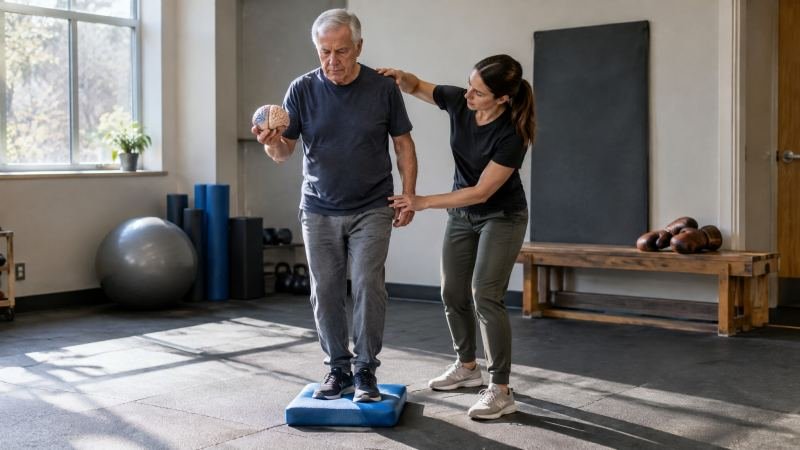
Proprioceptive drills train your sense of position. Standing on varied surfaces, placing a foot on a precise target, or moving with your eyes closed in a safe setup all push your brain to rely on joint and muscle feedback again. For people whose pain has dulled that feedback, this is often the missing piece.
Cerebellum-Centric and Cross-Body Coordination Patterns
The cerebellum handles timing and smoothness. Drills built around rhythm, precision, and changing tempo ask it to refine movement rather than just repeat it, and my cerebellum-focused balance drills guide lays out the set.
Cross-body patterns link the two sides of the brain and body. Reaching a hand toward the opposite knee, or pairing arm and leg movements in sequence, mirrors what walking demands, and my guide to cross-body coordination drills shows how they progress.
This is where exercise for pain and coordination becomes one program rather than two. The same drills that sharpen timing also teach a guarded body that it can move with less bracing.
Chronic Pain Balance Training Starts With an Assessment
Two people with the same diagnosis can need very different programs. For that reason, chronic pain balance training begins with a look at you, not a template.
My background shapes how I assess:
- Sixth-degree black belt, with a martial arts and boxing foundation.
- Founder of Texas's first Rock Steady Boxing affiliate.
- Experience coaching clients with Parkinson's disease and special needs adults.
- Ongoing certification through the NeuroTraining Institute. You can read more about what a neuro-training specialist certification involves.
That history gave me a practical understanding of how people with neurological conditions move, and the drills I use come from that work rather than from a generic fitness playbook.
What the First Assessment Measures
The assessment gathers four kinds of information, and each one sets part of your plan.
- Pain history and triggers. Where it hurts, what makes it worse, and what you already avoid. This sets your starting dose and your safety limits.
- Balance and coordination screen. How you stand, shift, turn, and move your limbs together. This shows where to begin and how quickly to progress.
- Visual and vestibular responses. How your eyes and inner ear handle head and gaze movement. This tells me whether those drills belong early or later.
- Your goals. Walking a grocery aisle, getting out of a car, or returning to a sport all lead to different programs.
Together, these set your starting level and your pace. They also mark the points where we hold back, so that progress does not cost you a flare-up.
When to Get Medical Clearance Before You Start
Some situations need a clinician's sign-off before any new training, mine included. If one of these applies to you, speak with your doctor or physical therapist first:
- Recent falls, especially one that caused injury.
- Dizziness or vertigo, particularly if it is new or severe.
- New neurological symptoms such as numbness, weakness, or changes in vision or speech.
- Pain that is worsening or changing in character.
Neuro-training complements medical and physical therapy care. It does not diagnose, it does not cure, and it should never be a reason to delay an evaluation of something that has changed. When your care team clears you, bring their guidance into the assessment and we will work inside it.
If you have Parkinson's, my guide to martial arts training for Parkinson's is the best next read.
Book a Balance and Coordination Assessment
If chronic pain or unsteady balance has narrowed what you do, the first step is a balance and coordination assessment with me at Neuro With Mr. B. It starts from your history and your goals, not from a standard routine, because that is the only way a plan can fit you.
In the session, we go through your pain history and triggers, screen your balance and coordination, check your visual and vestibular responses, and talk about what you want to get back to. You leave knowing where your starting level is and what the first layer of your plan looks like.
Bring a written summary of your pain history, any notes from your doctor or physical therapist, and a short list of goals. Specific goals help most. "Walk to the mailbox without gripping the wall" tells me more than "feel better."
Caregivers and care centers are welcome to ask on behalf of the adults they support, and I'm glad to talk through what the process looks like for them.
To begin, contact Neuro With Mr. B and request your first balance and coordination assessment with Jeff Battenberg.
Frequently asked questions
Can exercise make chronic pain worse?
It can if the dose is too big or the movement does not match your body. Start with shorter, easier sessions than you think you need, and add time only after the next day feels normal. If pain is climbing or changing, pause and check with your clinician.
Is neuro-training a replacement for physical therapy?
No. It is a complement to medical and physical therapy care. It trains the sensing and coordination systems behind balance, while your clinicians manage diagnosis and treatment of the source of your pain.
How is neuro-training different from regular balance exercises?
Regular balance exercises mostly ask you to hold a position and build strength. Neuro-training targets the inputs behind balance, including vision, the vestibular system, body-position sense, timing, and cross-body coordination, and sets the starting level through an assessment.
Do I need medical clearance before a first assessment?
You do if you have had recent falls, new or severe dizziness or vertigo, new neurological symptoms, or pain that is worsening or changing. Get your clinician's sign-off first and bring any notes to the session.
Can caregivers or care centers request an assessment for an adult they support?
Yes. Caregivers and care centers can contact Neuro With Mr. B on behalf of an adult with Parkinson's, another neurological condition, or special needs. The assessment still starts from that person's history, abilities, and goals.
Neuro With Mr. B provides education and coaching, not medical diagnosis or treatment. For medical concerns, consult a qualified healthcare professional.